For years, AI in telecom was largely associated with basic chatbot automation — tools that often struggled to handle even simple customer queries like billing or plan details. Today, that perception has shifted dramatically.
In 2026, generative AI is no longer confined to customer support. It is becoming the foundation for how telecom networks operate, how services are delivered, and how revenue is generated. What was once reactive is now predictive, automated, and increasingly autonomous.
As adoption accelerates, communication service providers (CSPs) are moving beyond experimentation and embedding AI directly into their operational and business systems.
Beyond Chatbots: The Rise of Agentic AI
The first wave of AI in telecom focused on answering questions. The next wave is focused on taking action.
Agentic AI systems are designed not just to identify issues, but to resolve them. Instead of flagging a network problem for manual intervention, these systems can diagnose faults, trigger corrective actions, and confirm resolution in real time.
For telecom operators, this shift reduces operational overhead while improving service reliability. It also introduces a new level of automation across network operations, customer support, and service delivery.
From Predictive to Prescriptive: Self-Healing Networks
Network maintenance has always been one of the most resource-intensive aspects of telecom operations. Generative AI is now transforming this model.
Traditional predictive maintenance could indicate when a component might fail. AI-driven systems go further — identifying root causes, recommending actions, and in many cases executing them automatically.
By analyzing real-time telemetry data, network logs, and historical patterns, operators can:
● Detect anomalies before they impact service
● Reduce mean time to repair (MTTR)
● Optimize energy consumption and infrastructure usage
This evolution toward self-healing networks is not just about efficiency — it directly impacts service uptime and customer experience.
Hyper-Personalization: From Segments to Individuals
Telecom marketing has historically relied on broad segmentation and generic offers. Generative AI enables a shift toward truly individualized engagement.
By analyzing usage behavior, billing patterns, and service interactions, AI can generate highly targeted offers in real time.
Examples include:
● Dynamic plan adjustments based on usage patterns
● Real-time add-ons triggered at peak consumption moments
● Proactive churn prevention through personalized retention offers
This level of personalization drives measurable business outcomes — increasing customer lifetime value while reducing churn.
The Shift to AI-Native Telecom Architecture
The telecom industry is moving from cloud-native to AI-native infrastructure.
AI is no longer an add-on layer. It is becoming embedded across:
● Network operations
● Customer lifecycle management
● Billing and monetization systems
With the growth of 5G-Advanced and emerging 6G use cases, real-time processing at the network edge is becoming critical. AI-driven decision-making requires low latency, continuous data flow, and tightly integrated systems. This is where the underlying operational platform becomes essential.
Where AI Meets Monetization: The Role of BSS and Real-Time Systems
While much of the focus around AI in telecom is on networks and customer experience, its real impact is unlocked through monetization systems.
AI-driven decisions — whether related to pricing, bundling, or customer engagement — rely on:
● Accurate, real-time usage data
● Flexible billing models
● Immediate charging and policy enforcement
Without this foundation, AI insights cannot be translated into revenue outcomes. This is where platforms like Telgoo5 play a critical role.
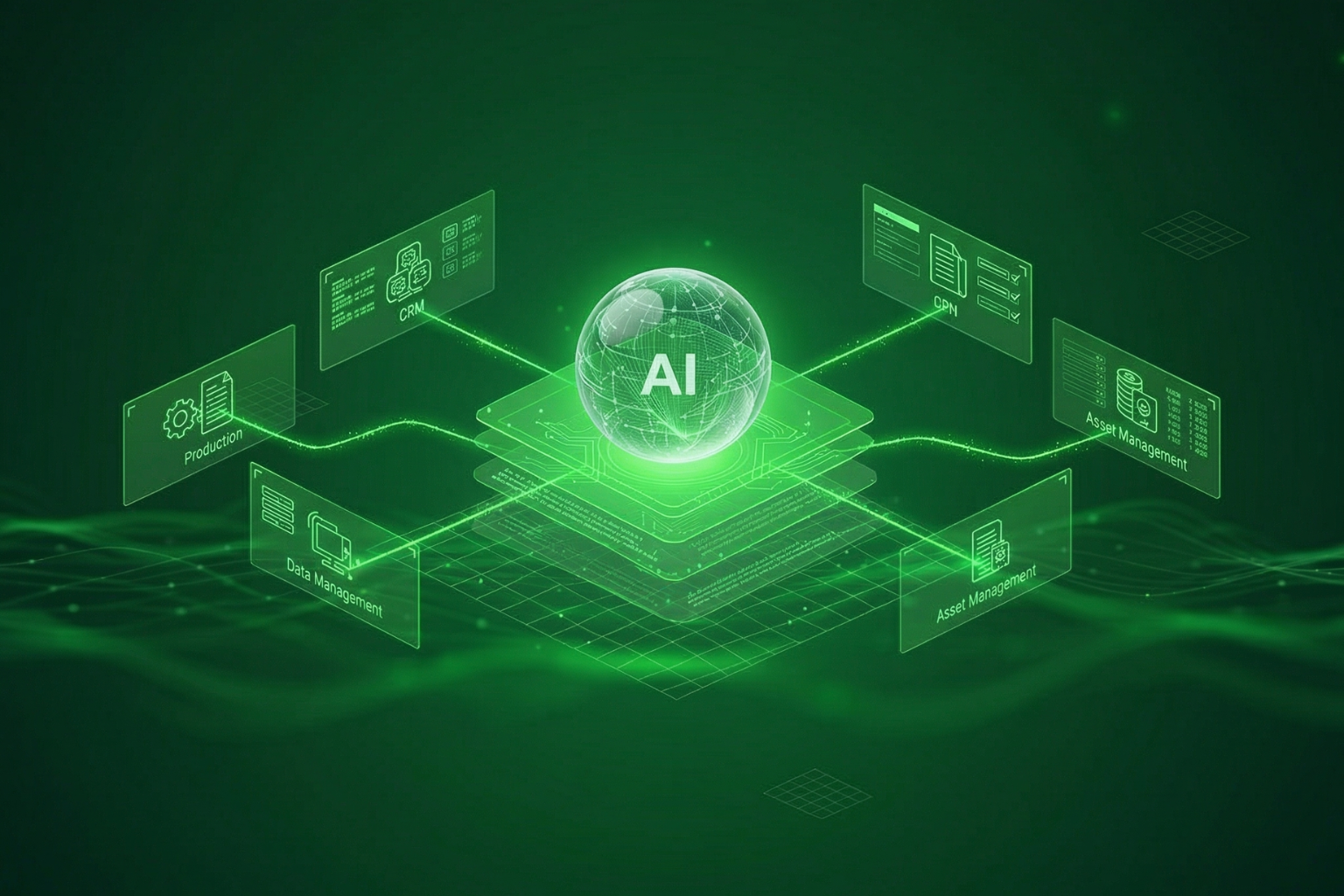
By providing a unified system for billing, real-time charging, customer management, and service operations, Telgoo5 enables service providers to operationalize AI at scale. AI models can leverage real-time data to dynamically adjust pricing, trigger offers, optimize plans, and manage revenue flows — all within a single integrated environment.
In an AI-driven telecom ecosystem, the BSS layer is no longer just a support function. It becomes a core enabler of intelligence.
Challenges Ahead: Scale, Cost, and Governance
Despite rapid progress, the adoption of generative AI in telecom comes with challenges.
Training and running large-scale AI models requires significant computational resources and energy. At the same time, regulatory pressures around data sovereignty and privacy are increasing.
Telecom operators must balance automation with control, ensuring that AI systems remain transparent, secure, and aligned with regulatory frameworks.
Human oversight will continue to play a critical role, particularly in high-impact operational decisions.
Conclusion: From Automation to Intelligence
The role of AI in telecom is evolving rapidly — from assisting customer interactions to driving end-to-end network and business operations.
What defines the next phase of this transformation is not just intelligence, but execution. AI must move beyond insights to real-time action — across networks, customer engagement, and revenue systems.
For telecom operators, this means investing not only in AI models, but in the platforms that enable them to operate effectively.
As networks become more autonomous and services more personalized, the ability to connect AI with real-time operations, billing, and monetization will determine who leads the next generation of telecom.
FAQ :-
Q1. How is generative AI being used in telecom beyond customer chatbots?
Generative AI started in telecom with customer-facing chatbots, but its role now extends into operations such as summarizing tickets, assisting agents, generating knowledge articles, and supporting network analysis and troubleshooting. The shift is from answering simple questions to augmenting complex workflows across care, sales, and operations. Telgoo5 applies AI agents to telecom workflows so operators can improve both customer experience and back-office efficiency.
Q2. What are the main use cases for generative AI in telecom customer service?
Common use cases include intelligent virtual assistants, real-time agent assist, automated response drafting, call and chat summarization, and self-service for tasks like plan changes and troubleshooting. These reduce handling time and free human agents to focus on higher-value interactions. Telgoo5's AI agents are built for telecom-specific scenarios, connecting to billing and CRM data so responses are accurate and actionable.
Q3. How can generative AI support intelligent network operations?
In network operations, generative and analytical AI can help interpret telemetry, surface anomalies, summarize incidents, and suggest remediation steps for engineers. This supports faster diagnosis and a move toward more proactive, lower-touch operations. When paired with a modern OSS, these capabilities help operators reduce downtime and operational overhead.
Q4. What are the risks or challenges of deploying generative AI in telecom?
Challenges include data accuracy and hallucination, integration with existing BSS/OSS systems, data privacy, and ensuring AI outputs are grounded in trustworthy operational data. Success depends on connecting AI to reliable sources such as billing, CRM, and network systems rather than letting it operate in isolation. Telgoo5 emphasizes AI that is grounded in real telecom data so outputs stay accurate and defensible.
Q5. How does generative AI improve efficiency for MVNOs and operators?
By automating repetitive interactions and assisting staff, generative AI reduces cost per contact, shortens resolution times, and scales support without proportionally scaling headcount. It also helps smaller operators and MVNOs offer a higher level of service than their size would traditionally allow. Telgoo5 enables MVNOs to embed AI-driven support and automation directly within their BSS environment.
Q6. How do you integrate generative AI with existing billing and CRM systems?
Effective integration relies on secure APIs and access to real-time customer, billing, and order data so the AI can act on accurate context rather than generic responses. The goal is an AI layer that reads and acts within the operator's systems of record, not a disconnected chatbot. Telgoo5's platform brings billing, CRM, and order management together, giving AI agents the unified data they need to be genuinely useful.